The Morning Workout As Practice
By Scott Anderson • 2 min read
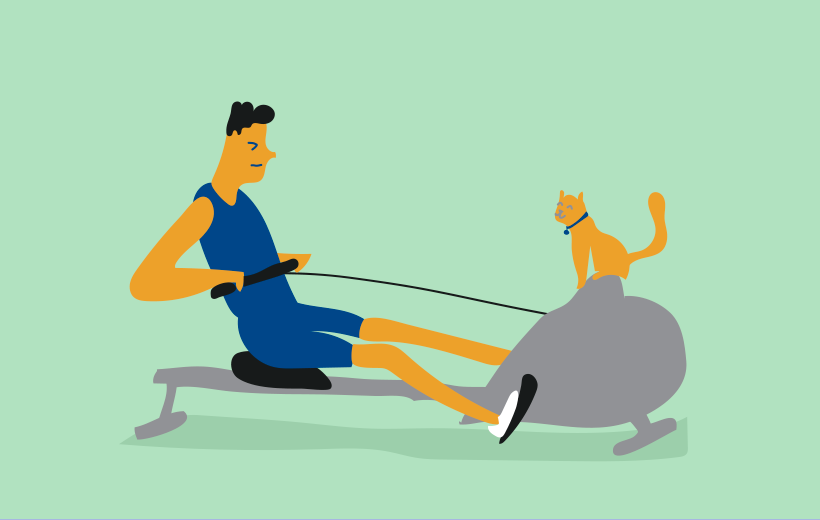
THE CATS CAPABLY DESCENDED the stairs in the morning darkness, though my human eyes required some light to safely negotiate the stairs to my workout space. Once settled onto my rowing machine, I reflected on the intention that the union of the impending physical workout and mental practice not only benefits me, but that the benefits may radiate outward to benefit all beings.
Initially the cold air against my skin was the primary sensation for which I was aware, though after just a few minutes of the rhythmic back and forth of rowing, I was aware of an entire constellation of sensations: the feeling of the rowing machine’s handle in my hands, the feeling of my feet pushing against the foot platform, and the persistent whooshing sound that accompanied every stroke. In time, I became aware of how my breathing grew more rapid, while simultaneously the coolness of the room yielded to the warmth that arose from deep within my body.
Within this constellation of sensations, my mind would periodically time-travel into the future; what will I have for breakfast? Will my email inbox again be filled with more tasks requiring my attention? And upon recognizing my voyage into the future, I returned to the task at hand — rhythmically back and forth, aware of the myriad sensations present in the here and now. Like the cats playfully chased each other about the room, my mind would flit from future to present and then from present to past.
In that meeting yesterday, did I come across as competent? Or did I come across as being uncertain? Recognizing this other form of mental time-travel, dwelling in the past, I returned to the present moment of rowing; not thinking of my body in some abstract way, but rather, the ordinary experience of feeling the body’s sensations in the here and now.
The back and forth of the rowing machine continued, as did my mind’s backsprings and somersaults of mental time travel. In the gaps between the future and the past, the present moment yielded a spaciousness in which time opened up. My usual view of time as a finite resource that is to be guarded and conserved birthed a sense of ease that had been there the entire time, hidden in plain sight.
After half an hour of moderate intensity cardio on the rowing machine, I got to the floor to do some core exercises. Each movement yielded its own constellation of sensations, and as I twisted and turned through space, Rinpoche’s key teaching that awareness is our essence at anytime and anywhere was brought from the conceptual to the experiential realms.
After twenty minutes of core exercises, I sat quietly and was aware of my breathing. In the aftermath of the workout, it was fast, and I also felt sweat dripping down my torso. Over time, my breathing naturally became slower and deeper, while the heat of my body returned to its equilibrium state. With a cat now on my lap, I dedicated whatever benefits accrued from this physical and mental practice to the benefit of all beings near and far.
March 2026
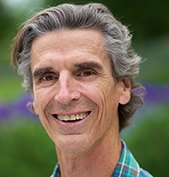
Scott Anderson has practiced yoga and meditation since he was a teenager. Since meeting Mingyur Rinpoche in 2010, he has dedicated himself to the practice and dissemination of Rinpoche’s teachings as one of the founding leaders of Tergar Madison. Scott has a Ph.D. in Kinesiology from the University of Wisconsin–Madison. His research at UW-Madison’s Human Performance Lab explores the interaction of meditation, athletics, and physical recovery, and his teaching activities are at the intersection of physical activity and meditation.
Learn meditation under the skillful guidance of world-renowned teacher Yongey Mingyur Rinpoche at your own pace.

Scott Alexander Jones, a self-described “stone-cold atheist hardened against religion” finds the spiritual path through the eye-opening discoveries of science that is validating the many benefits of meditation.

A quiet moment of confusion becomes an unexpected teacher, revealing how ignorance and wisdom are two ways of meeting the same open space.
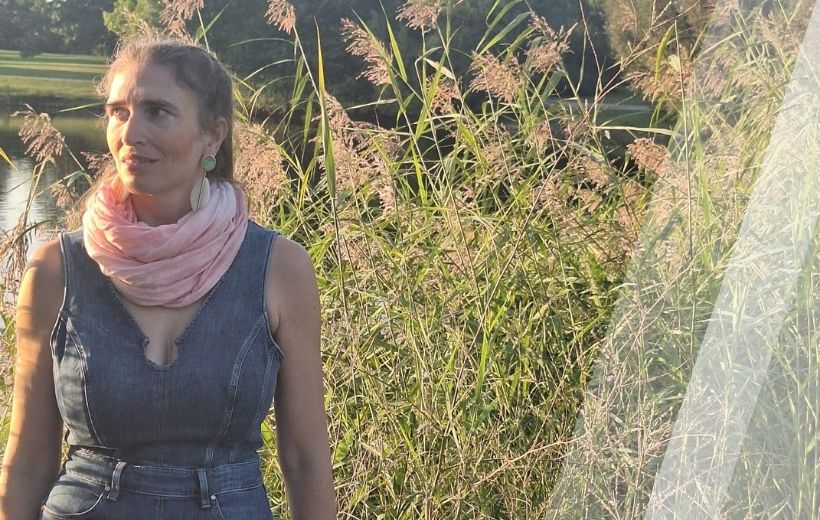
Faced with the challenges of Crohn’s disease, philosopher Maria Müller Hornbach turned to meditation, which transformed her relationship with pain and brought greater ease to her life. Inspired by Mingyur Rinpoche’s teachings, she took Tergar’s Meditation Teacher Program, and now teaches meditation classes in Germany.
If you enjoyed reading our articles, please join our mailing list and we’ll send you our news and latest pieces.




2026© Tergar International. The Tergar logo is a registered service mark of Tergar international.