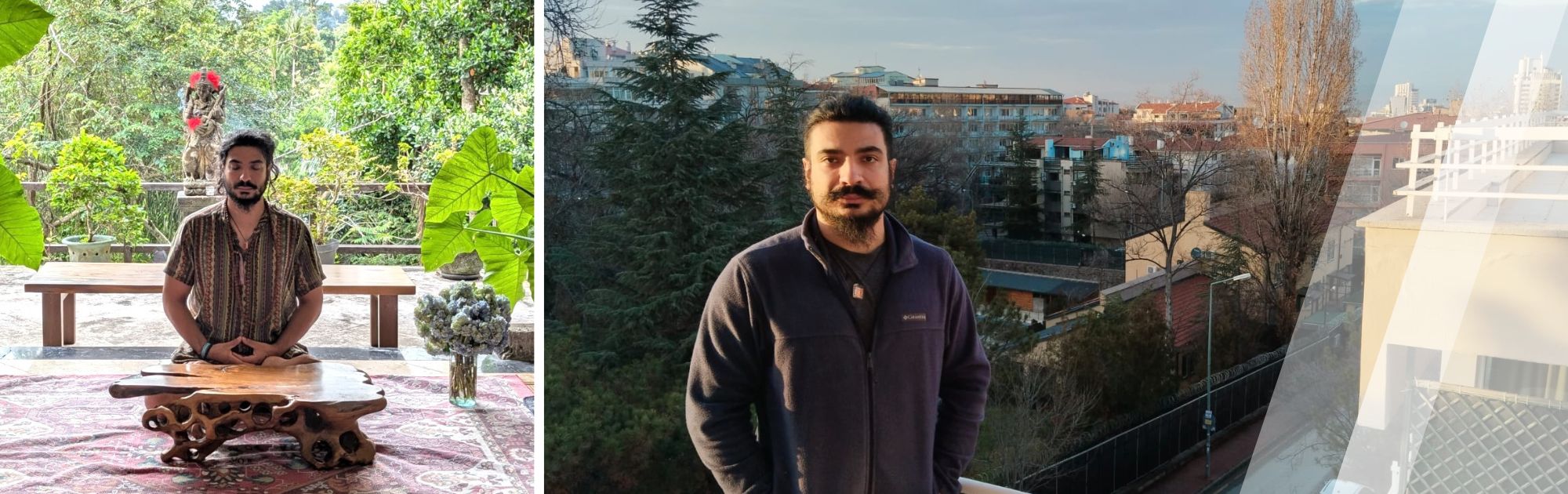
Vision for Rinpoche’s Teachings in Turkey
By Franka Cordua-von Specht • 3 min read
By Franka Cordua-von Specht • 3 min read
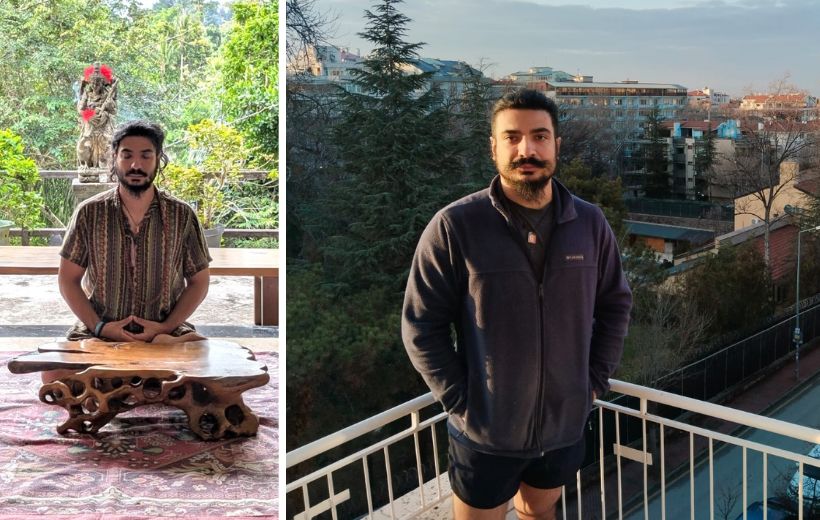
B. KAAN KEZER, 32, lives in Ankara, Turkey’s capital and second-largest city, home to nearly eight million people. And yet, it’s a “dharma desert,” as he shared in a recent interview.
Kaan’s focus is on bringing Mingyur Rinpoche’s teachings to his country. He’s busy translating Rinpoche’s books, building a retreat center close to the city, and completing Tergar’s intensive Meditation Teacher Program (MTP).
Kaan is one of the most fascinating people I’ve interviewed. None of his answers are in the slightest predictable. They’re shaped by a critical mind that loves to question. This way of relating to life, he told me, started early.
“According to what my parents say, I didn’t have the ability to accept any external answers,” he said. He had to test things for himself. “Until I completely experienced what they were saying was true, I was actually continuously trying it out.”
This orientation shaped how he listened to adults as well. Long before he encountered meditation and Buddhism, he was already watching the relationship between words and actions. “Whatever they are saying, I was looking at what they are doing,” he said. Often, these were at odds.
This same clarity made him sensitive to the gap between what society promises and what it delivers. As a young person, he noticed that adults often offered him a bargain: behave, study, follow a prescribed path, and happiness would follow. But he looked at the evidence.
“If you just pay attention to what society promises and what the reality is,” he said, “immediately we will start to find dharma.”
This was his experience, finding himself in the gap between the promises and reality.
Years ago, he studied electrical engineering. In his third year, he realized the training was essentially preparation for a military career.
Disappointed, he left and threw himself into something else: an NGO that aimed to create opportunities for underprivileged and gifted youth. He wanted to remedy what he saw as missing in the education system.
But once it was created, he began to see something painful: even an environment that offered seemingly everything for its users couldn’t elicit genuine change.
“I saw in this setting it was not about education, not about opportunities, not about money, not about connections,” he told me. “It was all about this basic perception of how you are seeing your reality and how your system processes stuff.”
“None of these people changed their afflictive emotions and how they’re responding to them — let’s say anger, let’s say doubt, let’s say plotting.”
“And the more I saw it, I went into a really deep depression.”
But it was then that a life-changing insight took place: “I understood internally something needs to shift. It’s internal, it’s not external.”
That insight propelled him into a new direction: understanding human decision-making. He enrolled in classes focused on institutional economics and behavioral economics. Again, by the third year, he came to a disillusioning conclusion.
“I understood that we cannot solve anything by economics,” he said. “It’s something deeply rooted in how human beings are making decisions.”
Around the same time, depression opened a different door — a deep dive into the mind itself. He studied Western alchemy, Sufism, Taoism, and multiple Buddhist schools. Eventually, Dzogchen drew him in, and he discovered both Lama Lena and Mingyur Rinpoche.
“If you just pay attention to what society promises and what the reality is, immediately we will start to find the dharma.” — Kaan Kezer
In the past ten years, Kaan has been teaching meditation in Turkey. Along the way, he’s learned a lot about what does (and doesn’t) translate across cultures.
Some traditional Buddhist practices, like prostrations, Vajrasattva, and mandala offerings, didn’t work for many of his students. For some, it was cultural; for others, it was emotional. The leap to the teachings was too wide.
“I was searching for a foundation to the teachings, a foundation to prepare people without, let’s say, praying to the lamas.”
For Kaan, the devotional practices are meaningful. “For me, it’s a blessing,” he said. But he also saw clearly that in Turkey, for many students, the cultural bridge was too wide.
What he needed was a path that could meet people where they are. He found that bridge in Mingyur Rinpoche’s approach and in the Meditation Teacher Program.
“Mingyur Rinpoche was simplifying and creating Anytime Anywhere Meditation and Joy of Living, making it more accessible, which is what I need in this environment,” he said. “Rinpoche’s compassion really moved me — his openness and simplicity, especially the simplicity — so I can translate it easily.”
Kaan has also made a striking observation about his students in Ankara: about half of them are foreigners. He does have wonderful, committed Turkish students, but he also sees a pattern. Many Western students arrive with a greater sense of openness.
“They are curious,” he said. He attributes this, in part, to the lack of an inherited spiritual “certainty” in many Western contexts. Curiosity then becomes possible.
And how has the Meditation Teacher Program benefited him personally?
“Trust,” he answered. In previous years, he had noticed a growing duality in his mind: “advanced practitioners” over here, “regular people” over there. He found it disturbing.
But something shifted through Mingyur Rinpoche’s teachings, rooted so deeply in buddha nature or, as Rinpoche often refers to it, innate goodness.
“I was able to start to feel this sense of trust with everyone,” Kaan said. “I was able to really trust into everyone’s nature. It really helped me to be more compassionate.”
At the same time, he became more aware of his own innate goodness. “I think it increased my inner trust a lot as well.”
April 2026

Franka Cordua-von Specht, co-founder of the Tergar Vancouver Practice Group and Tergar Canada, contracts for Tergar International’s marketing and communication team. She is a Tergar Guide and facilitates Joy of Living workshops.
Learn meditation under the skillful guidance of world-renowned teacher Yongey Mingyur Rinpoche at your own pace.


A lifelong, often uneasy search for truth carries Olivia across traditions, continents, and callings—until motherhood becomes the moment she finally commits, heart and body, to the path.
A choral conductor discovers that the lessons of music and the teachings of the Buddha were pointing to the same truth.

“Buddhist wisdom says that life consists of suffering, but lasting strength is found in resilience. In knowing you can handle whatever comes your way. Not because you’re invincible, but because you’ve learned how to suffer well. And suffering well begins with facing yourself, by embracing the messy yet beautifully complex aspects of being human.” – Chris…
If you enjoyed reading our articles, please join our mailing list and we’ll send you our news and latest pieces.




2026© Tergar International. The Tergar logo is a registered service mark of Tergar international.