Aspiration: The Practice of Making a Wish
by Gustavo Gitti • 8 min read

EVERYTHING IN OUR WORLD began as an aspiration. A wish may appear almost insignificant, yet it may be the most powerful force we have.
Working with aspirations is one of my favorite practices from the Buddhist tradition. In this short article, I would like to share some basic reflections and wonderful quotes I’ve collected over the years from great teachers.
We are constantly making small wishes, vows, and aspirations. If you have a mind and a heart, this means you are always carrying some kind of motivation.
Most of the time, our wishes are neither deliberate nor evident. They arise out of habit and, if spoken aloud, would sound something like, “I want something to eat now!” or “I hope she doesn’t talk to me today.” Sometimes we carry wishes we’re not proud of, like “I hope he fails.” Other times, we timidly offer a kind wish, as when we say, “Have a good day.” At the turn of the year, or on birthdays, we make an extra effort to form better aspirations.
Behind all these small wishes, even the confused ones, there is a deeper longing to be happy and free. But without recognizing this subtle aspiration that is always with us, we get lost in small tasks, just trying to get by. Our dreams shrink. We stop aspiring to be truly happy and to see a better world. We just want a beer and some rest, and that’s it.
The great wisdom traditions help us reclaim this natural capacity. We can learn how to aspire in a more intentional, inclusive, and vast way.
As the Buddhist teachings remind us, we and our world are the result of our past aspirations, and will become what we are aspiring to right now.
But how does a wish become reality? Not through magical thinking or any “law of attraction.” It is more like what moves you to prepare a nice pasta. You imagine how delicious it could be, gather the ingredients, and get to work. So when we dream, we start to connect with the realm of possibilities. Reality includes not only facts but also the potential for new things to arise. Otherwise, nothing would ever change.
Imagine wishing every day that the rivers in your city were clean. First, it becomes more natural not to pollute them. Second, it becomes easier to share that dream with others. Gradually, that wish unfolds into action. Everything is born first as an aspiration in someone’s mind.
Here in São Paulo, most rivers were cemented over, buried, and turned into avenues. The few that remain open are so polluted they have become part of the landscape of neglect — you pass by them holding your breath. One of the main reasons nothing changes is simply a lack of imagination. People accepted this as a fact and stopped dreaming. That is why some activists are now creating paintings and realistic animations so people can start to visualize how wonderful the city could be.
“The ultimate, hidden truth of the world is that it is something that we make, and could just as easily make differently.”
— David Graeber
A wish from the heart is not the same as an impulse, like craving chocolate. Nor does it use the language of demand. Instead of thinking, “I want him to stop smoking!” you think, “May he be free from unhealthy patterns.” An aspiration is autonomous. It does not depend on the other person. You simply make the wish and let it go, without standing there checking whether the person stops smoking immediately.
We almost never use this language to communicate with others or with life, “May this happen.” Usually, we remain stuck in “This should happen!” or “This will never happen!”
I have never seen a party begin with people complaining, “No one is throwing a party.” A party begins with the creative language of aspiration, the language that does not buy into the solidity of the apparent situation: “What if tonight we did this…?”
Aspiration is the irresistible language of revolution. It is no coincidence that Martin Luther King Jr. spoke this way throughout his 1963 speech, “I Have a Dream.”
“If you have a grand aspiration, a failure here and there doesn’t bother you. So you sleep well, you live well. Without a grand vision, you have a lot of things to worry about. There are many stories about how maras and demons are afraid of someone with a vast aspiration. If your aspiration is small, limited, then there is room to trick you . . . If you wish somebody to be happy, sometimes it feels that this is just a wish. Even if somebody did experience happiness right after, you may still doubt, thinking this has got nothing to do with your wish. That’s why you need to understand how the mind and karma work. If a whole nation decides to wish good for others, each person doing that every Sunday morning at nine o’clock, our actions are followed by motivation, so society would definitely experience the effect of this good wish. The world is lacking people with good wishes.”
— Dzongsar Khyentse Rinpoche (teaching on The King of Aspiration Prayers)
As we nurture and share our heartfelt wishes, we begin to see the limitations, distortions, and biases hidden within them. Our aspirations reveal our understanding of the causes of suffering, the causes of happiness, and the methods for human flourishing. Over time, we may move from “May nothing bad ever happen to me” to “May I develop a flexible mind capable of meeting even the worst situations.”
We may also notice that our wishes gradually widen, starting with ourselves and slowly including more and more people, until our circle of care has no clear border. And we begin to find more partners and allies in what we do, because people can sense when we are not so self-centered anymore, when our activities are connecting more and more to their own needs.
This is also true in our closest relationships, at work, and in marriage. At the level of action, we will fail each other. But if we share our deepest motivation, our connection can survive those mistakes. At the level of aspiration, our connection remains intact, and we can always meet again.
“When our aspirations include the well-being and happiness of others, our actions and our lives as a whole gain a purpose greater than our individual existence.”
— Thupten Jinpa
Here are a few examples to give a sense of how easy and creative this practice can be. There’s no need to impress anyone or conform to a model. Just let it come from the heart. An aspiration can be as simple as “May I become more playful.”
Lama Tsering once said she was deeply moved when she read this aspiration from a great practitioner: “May I never forget the suffering of beings.”
Dzongsar Khyentse Rinpoche often suggests that we be creative and compose our own aspirations. Here’s one of his wishes for us:
“Aspire to create connections with people — even those who see only a brief flash of your bright shirt in a crowd — so that this becomes a seed of dharma in their minds. Aspire that your body, conduct, thoughts, and ideas become beneficial to beings in some way. For example, if I suddenly feel curious about the stock market, I aspire that this mundane thought may ripen into something beneficial.”
Here’s another one that I love, from Thupten Jinpa in A Fearless Heart, “May I respect my daughters as individuals instead of seeing them as extensions of my ego.”
If you are troubled by the state of the world, or even just watching the news, you can also make specific wishes like:
“May we find a way to live without wars, prisons, police, and firearms of any kind. May we one day spend on arts, education, and health what we now spend on military operations.”
“May a miracle happen and all countries implement a universal basic income, so people can work less, be less exploited, and have more free time to rest and to love.”
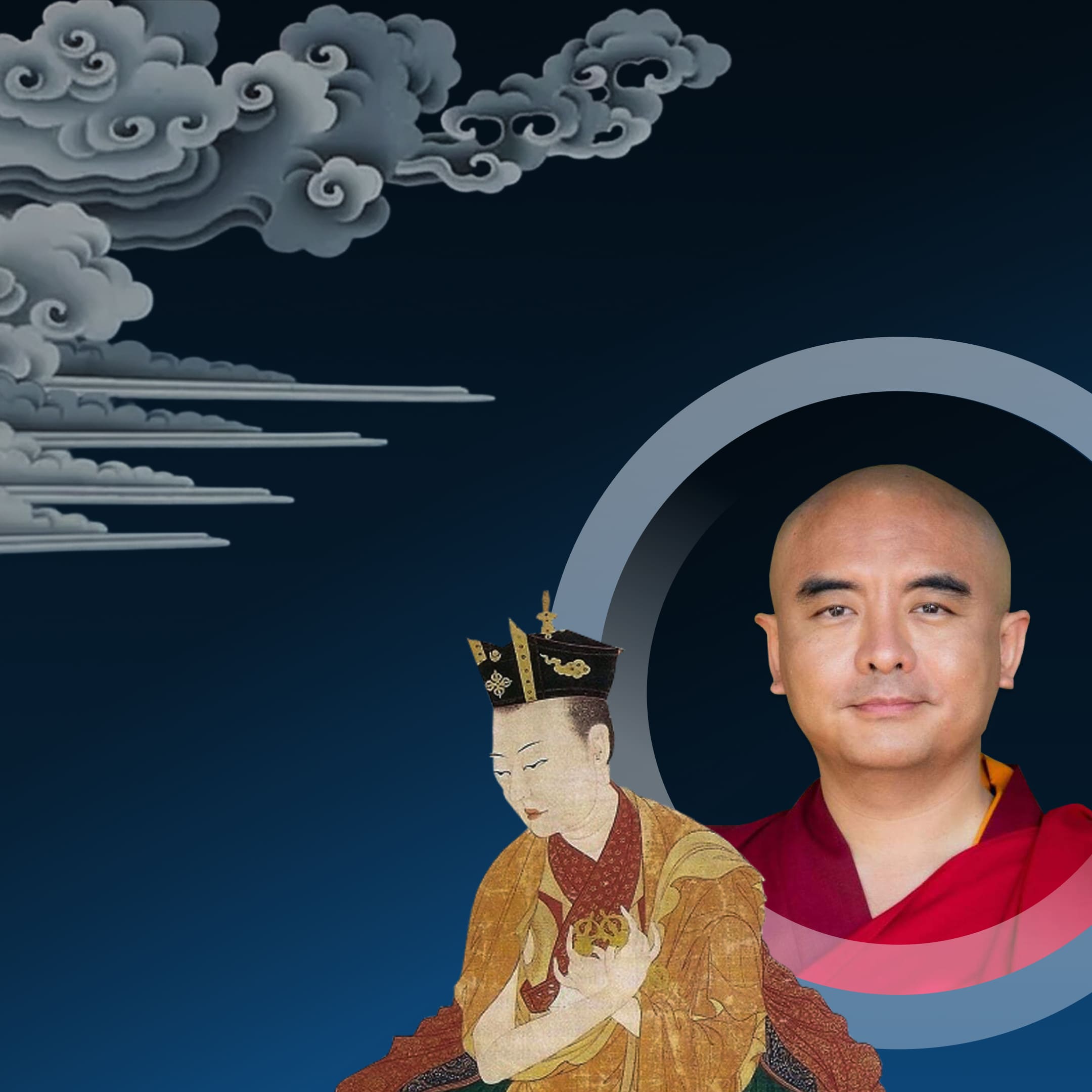
And, of course, we can also let ourselves be touched by the deepest aspirations. I love this verse from the Aspiration of Mahamudra by the Third Karmapa (translated by Cortland Dahl):
“Beings have always been buddhas by their very nature.
Yet not knowing this, they wander endlessly in saṃsāra.
For those beings who experience suffering without end,
May overwhelming compassion take birth in our minds.”
Aspiration is an endless practice, inseparable from all others. A few simple ways to explore it:
1. At the beginning and at the end of your sitting practice, try to make a heartfelt wish. You might wish to deepen your meditation, something like, “How wonderful it would be to have a vast, open mind.” You might even imagine yourself becoming a great yogi, full of qualities to benefit many beings spontaneously. Or you might direct that wish toward others, “May all beings be able to deeply rest and enjoy the spaciousness of their minds.” Sometimes it can involve a situation at work, in your city, or even an entire country. If you are a Joy of Living or Path of Liberation student, the opening aspiration or the initial prayers, and the dedication can all support this. One thing I find helpful is to connect these moments to whatever suffering I’m encountering each day. That way, the practice stays fresh, and everything fuels the motivation.
2. It is also very inspiring to receive teachings on aspiration and to recite traditional aspirations. In Buddhism, classic examples include the final chapter of The Way of the Bodhisattva by Shantideva, The King of Aspiration Prayers, and the Aspiration of Mahamudra. You can find many others here on the Lotsawa House website. Contemporary teachers have also written beautiful aspirations, such as Roshi Joan Halifax’s “Prayer for the Future,” Dzongsar Khyentse Rinpoche’s “Aspire to Aspire,” and Mingyur Rinpoche’s “An Aspiration for the World.”
3. In daily life, when you notice your language becoming driven by blame, criticism, or demand, try the language of aspiration instead. See what happens when you turn the problem into a wish. Lama Erik Pema Kunsang sometimes says, “Don’t blame; make a wish.” If you cannot help someone, “May I develop the ability to truly benefit beings.” If you cannot deal with your anger, “May I learn to make friends with my anger.” Instead of just suffering, suffer with elegance: make aspirations.
“There is no greater inspiration and no greater courage than the intention to lead all beings to the perfect freedom and complete well-being of recognizing their true nature. Whether you accomplish the goal isn’t important. The intention alone has such power that as you work with it, your mind will become stronger, your mental and emotional habits will diminish, and you’ll become more skillful in helping other beings. In so doing, you’ll create the causes and conditions for your own well-being.”
— Mingyur Rinpoche, Joyful Wisdom
“An Aspiration for the World”, composed by Mingyur Rinpoche and performed by Joanie Bones and the Buddha Band, featuring Sonam Dhonyoe
Here in Brazil, when someone does not know what to do, it is common to say that there is nothing left to do but pray. We say, “agora só rezando.” It is a beautiful way of not giving up, even when we cannot see a way forward.
When I sit down to meditate, if I’m honest with myself, I don’t know if I’m doing it right. I don’t know where this will lead or exactly what my potential is. I don’t know how and when my negative habits, afflictions, and ignorance will be transformed. I don’t know the extent of benefit this will bring to others. But I wish for this transformation. In a way, my entire practice is an expression of this wish.
Even if we don’t consider ourselves religious in any way, our practice is like a prayer. Not exactly asking the Buddha or our teacher for something, but expressing a wish: to learn how to deeply relax, to expand the heart, to discover our innate wisdom. Seen this way, every practice is permeated by the attitude of aspiration.
This can be a relief. When we feel frustrated with more complex practices involving longer liturgies and mudras, we can begin simply by aspiring to learn them. That aspiration leads us to receive teachings, to begin practicing, and gradually carries us along the path. Isn’t that wonderful?
May we continue to aspire and to be surprised by the power of a simple wish.
“Sentient beings are as limitless
As the boundless expanse of space;
So shall my prayers of aspiration for them
Be as limitless as their karma and harmful emotions!”
From The King of Aspiration Prayers: Samantabhadra’s “Aspiration to Good Actions”

Gustavo Gitti is an Anytime Anywhere Meditation (AAM) teacher, a program created by Mingyur Rinpoche. He also teaches TaKeTiNa, a rhythm-based method for human flourishing. He currently serves as one of the coordinators of the Tergar Brazil community and works with marketing and communication at Tergar International. Gustavo loves playing the berimbau and living with his wife Isabella in São Paulo, Brazil.
Join Mingyur Rinpoche and Khenpo Kunga to study and receive the reading transmission of this revered masterpiece and instruction manual.
Ten years ago Mingyur Rinpoche returned from his wandering retreat. Hear from the Tergar Instructors about the magical week when Mingyur Rinpoche emerged from his four-and-a-half-year retreat.

“When you’re grounded amid others’ suffering, you can help them in a different way. It’s better for them—and for yourself. You’re not afraid of coming up against a person’s suffering, but you don’t merge and identify with it, so you’re free.” – Micael Inês

After years of burnout and cynicism as a clinical psychologist, Hana Ko found renewed faith in humanity through the teachings of Mingyur Rinpoche.
If you enjoyed reading our articles, please join our mailing list and we’ll send you our news and latest pieces.




2026© Tergar International. The Tergar logo is a registered service mark of Tergar international.