Beyond Time with Bach and the Dharma
By Robert Glasmann • 3 min read
MINE HAS BEEN A WONDERFUL LIFE. Although I grew up in a home where a business career was the expectation, my parents supported my decision to pursue a life in classical music.
I started piano lessons when I was six. This led to music that would become my life and love. When I met the dharma in my 51st year, I began to realize that music had already been pointing me to basic Buddhist concepts.
During my first year of college, I was an accounting major. I’m grateful for what I learned about ledgers, balance sheets, debits, credits, and double-entry accounting. All of this was accomplished with paper and pencil. Personal computers had yet to be invented, although there were adding machines with reels of slender paper.
I discovered that the business world would not be for me. My happiest experiences were when I sang in choirs. I sang great literature, such as Igor Stravinsky’s Symphony of Psalms, with the Utah Symphony when I was a fifteen-year-old in high school.
I became a music major with an emphasis in conducting in my second year of college.
One of the big lessons I learned from musical performance was that of being in the moment. I was never aware of how long a piece of music was, as I lived in it — not thinking of past measures, not rushing ahead to an upcoming musical climax. It all unfolded right here, right now.
When the performance ended, the music was gone. It was only a memory. That impacted me greatly. This is where I first started to consider the importance of impermanence and now, now, now.
After completing my collegiate studies, I was hired as director of choral music at Wichita State University. I was fortunate to work with some of the best collegiate singers. The excellence of their voices, combined with their musical skills, made it possible for me to study and perform some of the best choral literature. This was my career for almost twenty-five years.
I would like to share with you one work, Johann Sebastian Bach’s Mass in B Minor. It’s almost two hours long. It’s scored for chorus, four soloists, and orchestra. It’s Bach at his best — a master of counterpoint, skillful with formal structures, adept at composing beautiful melodies. Yet he was a transcendent musician who went far beyond the craft of composition, elevating it to art.
I conducted this work during my last couple of years before retirement. The work went by in what seemed like an instant. The work was beyond time.
“Like waves in the ocean, all things are impermanent.”
“I lived in the music—never thinking of past measures or rushing ahead. Everything unfolded right here, right now.” — Bob Glasmann
I had a student who was taking an independent study with me. We talked about many ideas, including Buddhism, which I didn’t know much about at that time. My student mentioned a book he found and recommended. It was by Kalu Rinpoche, entitled Luminous Mind: Fundamentals of Spiritual Practice.
My student later informed me of a Sōtō Zen group that met at the Unitarian Church that he walked past on his way to the university. This was to become my first encounter with the dharma. My wife and I visited one Wednesday evening in the autumn of 2001. We were given beginning lessons on how to meditate and were invited to practice on Wednesday evenings and Sunday mornings. This was a good place for me to begin, as I had never had any formal sitting meditation experience.
I continued with Zen for about six years. Then, in 2007, I had the incredibly good fortune to learn of Yongey Mingyur Rinpoche. A friend told me, “Mingyur Rinpoche is the real deal.” She encouraged us to attend a four-day, in-person retreat with Rinpoche in Lawrence, Kansas. This is when I came to know that this was the path for me.
Two more in-person retreats were to follow, the last one being at St. John’s, where we received pointing-out instructions and other empowerments.
In 2010, I began working for the newly established Tergar International. I have been working for Tergar ever since.
What an opportunity this has been! For almost 20 years, I have witnessed Mingyur Rinpoche’s teachings unfold and deepen, online and in person. I have been granted the opportunity to help people from all over the world receive Rinpoche’s teachings. Best of all are the many colleagues with whom I now work, whom I call my friends.
I am deeply appreciative and grateful. It’s all come full circle. It’s time for some Bach.
April 2026
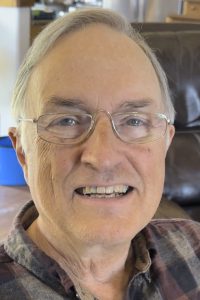
Robert Glasmann retired from work as a director of choral music from Wichita State University in 2010. He is now a customer support agent for Tergar. His wife, Ann, their dog, Lucy, and he live in a log cabin in the mountains of Montana near Yellowstone National Park.
Learn meditation under the skillful guidance of world-renowned teacher Yongey Mingyur Rinpoche at your own pace.


Drawing on decades of meditation experience, Myoshin Kelley offers practical and heartfelt guidance for anyone wishing to deepen their meditation practice.
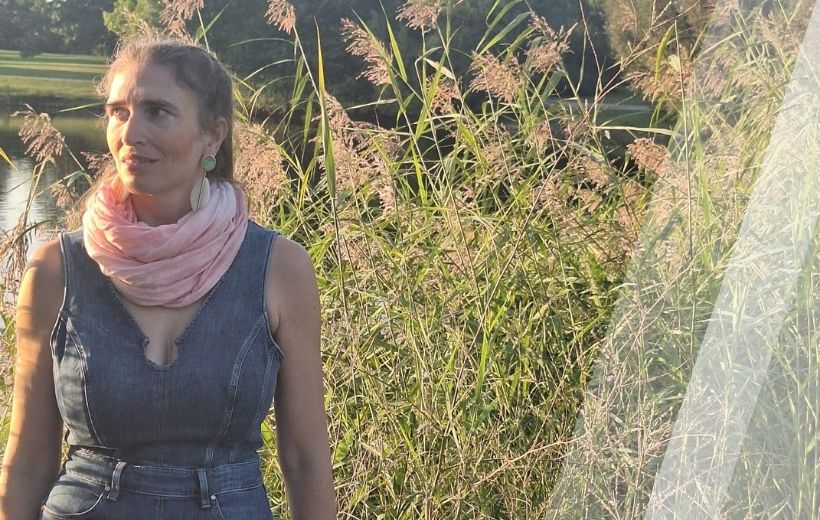
Faced with the challenges of Crohn’s disease, philosopher Maria Müller Hornbach turned to meditation, which transformed her relationship with pain and brought greater ease to her life. Inspired by Mingyur Rinpoche’s teachings, she took Tergar’s Meditation Teacher Program, and now teaches meditation classes in Germany.
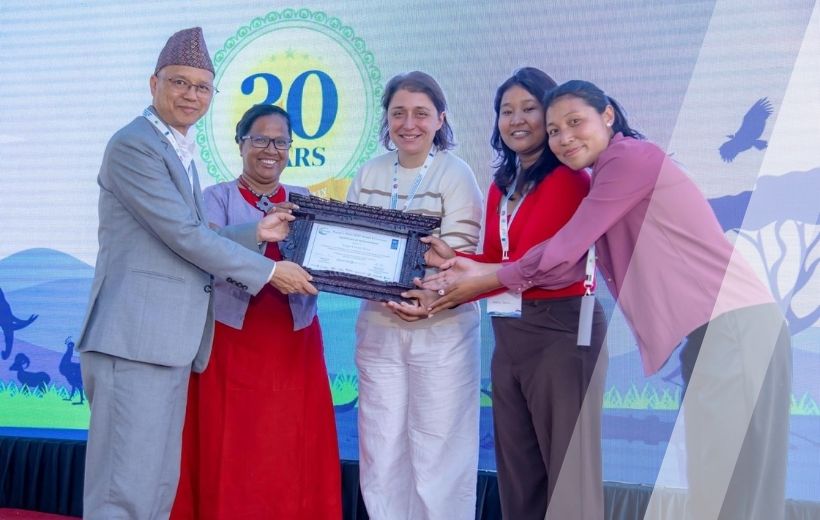
French humanitarian Margot Clavier leads sustainable development projects at 11,800 feet in remote Himalayan village Samagaun, helping locals create income through innovative initiatives while preserving their environment and cultural identity.
If you enjoyed reading our articles, please join our mailing list and we’ll send you our news and latest pieces.




2026© Tergar International. The Tergar logo is a registered service mark of Tergar international.