Wolfgang Stiller’s Bronze of Mingyur Rinpoche
By Franka Cordua-von Specht • 2 min read
By Franka Cordua-von Specht • 2 min read
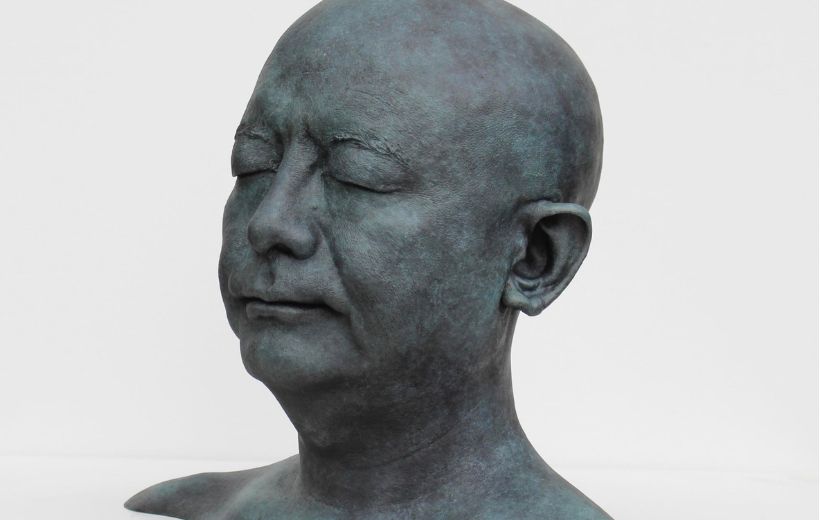
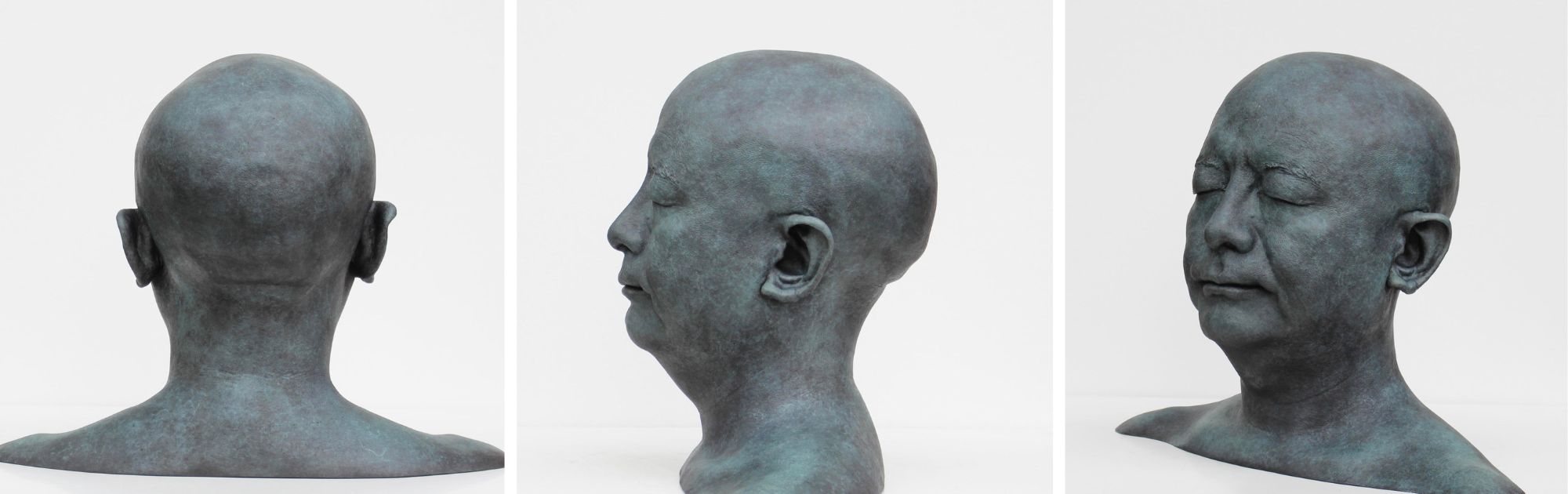
WHEN GERMAN SCULPTOR Wolfgang Stiller walks into his studio in Berlin, he usually has several projects on the go: his well-known “matchstick men,” new experimental pieces, and, in recent years, a project close to his heart — a series of bronze busts of Buddhist masters.
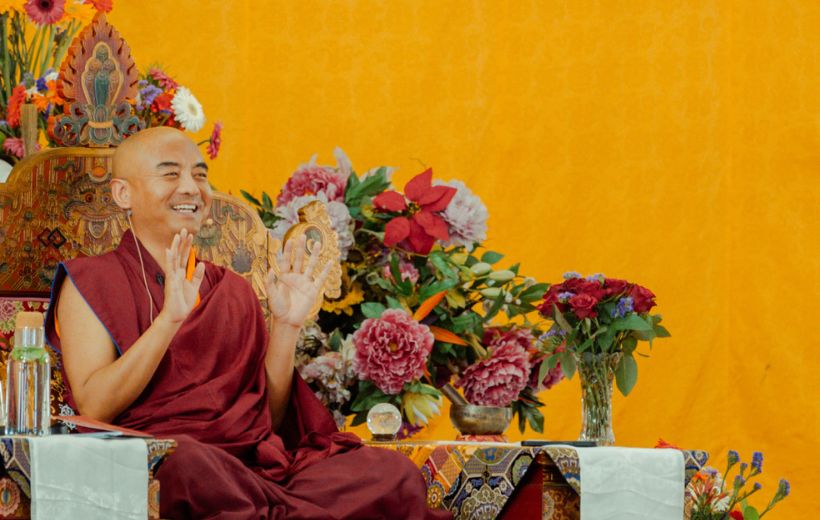
After Mingyur Rinpoche’s teachings in Germany this past summer, he completed an astonishing likeness of Rinpoche. Wolfgang only sculpts teachers to whom he feels personally connected. So far, he has created bronze busts of six masters, including Kalu Rinpoche, Dzongsar Khyentse Rinpoche, Jigme Khyentse, Rabjam Rinpoche, Ling Rinpoche, and now Mingyur Rinpoche.
His first encounter with Mingyur Rinpoche was through The Joy of Living, which he still recommends “even for non-Buddhists.” Later, he attended a winter retreat in Germany: “He was very important on my Buddhist path, a big inspiration.” He particularly appreciates how Rinpoche explains everything in such a clear and simple manner.
Wolfgang’s turn toward the dharma was gradual. He had always been seeking to understand the deeper meaning of life and hoped that “art might offer a way out.” But, as he put it, “with art, I can raise questions, but I don’t really get answers.” It wasn’t until two close friends died, one by suicide, that he began looking more deeply and found Sogyal Rinpoche’s The Tibetan Book of Living and Dying. Though he’s definitely “not a religious type,” the book opened a path he had intuitively been drawn to.
Even so, the heavy overlay of Tibetan cultural forms initially kept him at a distance. “I thought, ‘What do I have to do with all the Tibetan forms? It looks nice. Yeah, sure, but got nothing to do with me.’” He was drawn to teachers who could separate culture from the heart of the teachings. Among those, he feels a strong connection to Dzongsar Khyentse Rinpoche: “With him, I found someone who has, I think, a good balance.”
The bronze busts arose from this blend of artistic skill and spiritual commitment. They are not an “art career” move, and he knows the work won’t appeal to the broader art market. That is not the point. His vision is to offer the entire series to Dzongsar Khyentse Rinpoche, inviting Rinpoche to serve as the guardian of this “3D documentation of living Tibetan masters” for future generations.
Seeing a bronze in person, he says, is fundamentally different from seeing a photo. Using high-end silicone similar to that used in Hollywood special effects, the mold captures “every single pore of the face.” The process is surprisingly intense and time-consuming. He likes to tell his subjects, “Remember this is the way you will appear 100 years from now.”
This past summer in Berlin, when Mingyur Rinpoche offered him time one afternoon during a teaching weekend, Wolfgang and his team came to the hotel suite. Working quickly, they applied the fast-drying silicone and then built a thick plaster “hard shell” to keep the mold from getting wobbly. After about fifteen minutes, they removed the plaster. That positive would then be used to make a negative mold in preparation for the bronze casting.
Despite the time and skill involved, he does not treat these busts as personal expressive statements. “This is not about me; it is about the master. All I want to do is document the way he is.” He compares his role to medieval craftsmen: “I’m just really a little bit like the artist used to be in the medieval… just a tool, basically.”
Wolfgang has been an artist for more than 40 years. He laughs that the first and most honest reason he became an artist is simple: “I’m not made for a nine-to-five job.” Over the decades, his style has ranged widely. “I don’t have one style,” he says. He follows what genuinely fascinates him, even if, he says, that confuses curators and collectors: “If you try out a lot of different things, which I did, people get confused. They don’t see the red line… even though there is one.”
One of those red threads is his lifelong fascination with the human head. In European art, he points out, the head is a classic subject. And are there artists that he admires? In this day and age, it is Bruce Nauman, he says. And from those who have passed on, Alberto Giacometti and Auguste Rodin.
December 2025

Franka Cordua-von Specht, co-founder of the Tergar Vancouver Practice Group and Tergar Canada, contracts for Tergar International’s marketing and communication team. She is a Tergar Guide and facilitates Joy of Living workshops.
Learn meditation under the skillful guidance of world-renowned teacher Yongey Mingyur Rinpoche at your own pace.

What happens when awareness, community, and friendship come together in a Joy of Living Cohort?
A weekend of teachings on the Guru Principle led Lorraine Aguilar to make a bold decision: to follow the call of the dharma all the way to Nepal.
If you find that your emotions are challenging, join us on a transformative meditative journey as Justin Kelley reflects on Mingyur Rinpoche’s November retreat, “Abandoning, Transforming, Recognizing,” and the power of meeting the teachings where they come alive — at Tergar Osel Ling Monastery in Kathmandu.
If you enjoyed reading our articles, please join our mailing list and we’ll send you our news and latest pieces.




2026© Tergar International. The Tergar logo is a registered service mark of Tergar international.