Three Ways to Work with Difficult Emotions
By Cortland Dahl • 4 min read
IN OUR CURRENT Vajrayana Online course — Blueprints of Awakening Immersion — we’ve been exploring one of my favorite topics: how the Tibetan Buddhist tradition works with kleshas — those disruptive, painful emotions and mental states that knock us off balance. Out of this vast tradition, there’s a simple but powerful framework that I keep coming back to: three ways of relating to kleshas — remove, transform, and transcend.
The View and the Practice
Before we get to these three methods, we need to understand the larger perspective that guides our practice. In more traditional terms, we call this “the view.” When it comes to our kleshas, the basic perspective is that we do not suffer because these kleshas occur, but rather because we are not in touch with our true nature. When a klesha occurs, our perspective narrows, and we lose touch with the wide-open expanse of awareness and with the warmth of compassion and the radiance of wisdom that it constantly emits.
In other words, we don’t suffer because kleshas happen, but because we don’t see them clearly.
Our usual instinct when a painful emotion arises — anger, jealousy, anxiety, craving — is to think, This is bad. I need to get rid of it. We go to war with our own minds.
The Vajrayana view says: the problem isn’t that the klesha appears; the problem is ignorance — not seeing its true nature. At the deepest level, what we are is fundamentally whole and awake. The awakened qualities of awareness, compassion, and wisdom are already present. We aren’t practicing to manufacture these qualities; we’re learning to recognize them, even in the middle of the messiest emotions.
That’s the view. But for most of us, myself very much included, that view doesn’t instantly reshape our experience. We need practical methods. That’s where remove, transform, and transcend come in.
What Are Kleshas, Really?
Klesha is a central term in Buddhist psychology. It refers to emotional and mental states that disturb our well-being and throw us off balance. There are many ways to categorize them, but a classic framework talks about the three poisons:
Each covers a huge range. Aversion, for example, includes anger and rage on one end of the spectrum and anxiety on the other. What all forms of aversion share is a kind of distortion: we become fixated on what we don’t like and lose sight of the bigger picture. All the many shades of desire are pretty much the same, except we get stuck on the things we are attracted to instead of the things we are repulsed by
We live in a world that’s almost designed to stir up these states. Around Black Friday in the US, for example, the entire culture here has a collective klesha attack: craving, comparison, and FOMO get amplified by incredibly sophisticated marketing tools built to grab our attention and manufacture desire. The message underneath is often, “You’re not quite enough yet — but if you buy this, you will be.”
It’s a perfect storm for fixing, chasing, and feeling fundamentally inadequate.
So what can we do? That’s where the three methods come in.
Transcend: Remembering the Open Sky
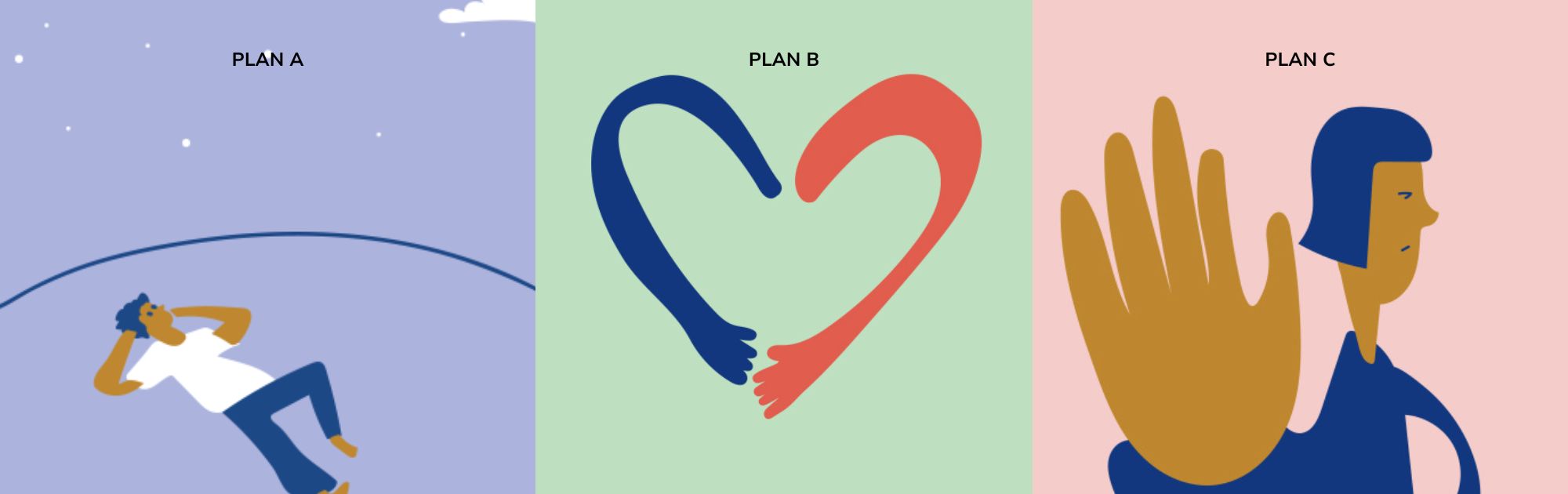
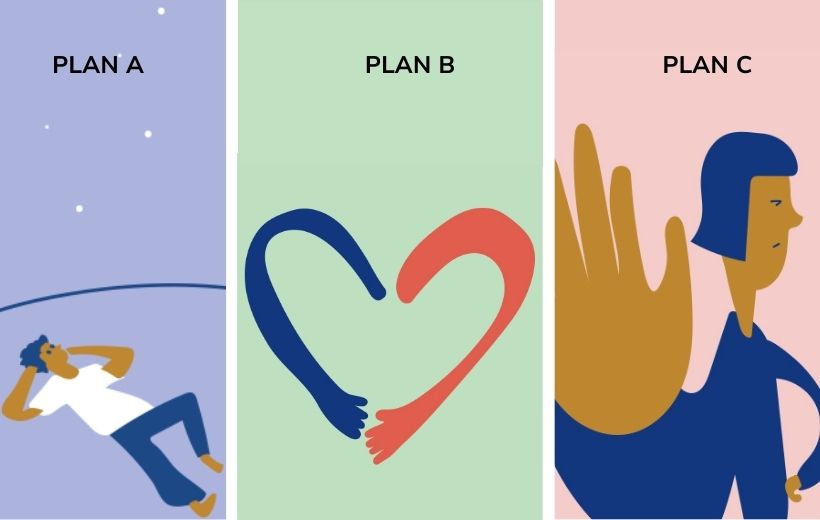
Even though the traditional list is “remove, transform, transcend,” in practice, I like to think of transcend as Plan A.
When we transcend a klesha, we’re not suppressing it or changing it. We’re recognizing that it’s just a tiny wisp of cloud in the vast open sky of awareness.
All the nature-of-mind teachings — Mahamudra, Dzogchen — are pointing us toward this: the direct experience of the nature of awareness itself. When we rest in the nature of awareness, the klesha is still there, but it’s small and insubstantial. We don’t need to fix it. It shows up and dissolves within a much larger space.
Over time, with practice, this can become a spontaneous shift: instead of getting lost in the emotion, we remember who we really are. But this is subtle, and it usually doesn’t happen right away. That’s why we also need a few more tools in our inner toolbox: transform and remove.
Transform: Changing the Relationship
Transformation is Plan B. Here, we don’t try to get rid of the emotion, and we don’t necessarily drop right into the nature of awareness either. Instead, we change our relationship to what’s happening.
Anxiety has been one of my main teachers. When I first started meditating over 30 years ago, anxiety was a big part of what brought me to the practice. A core method for me was very simple: when anxiety arose, I would bring awareness into my body and really feel it.
What does anxiety actually feel like?
What thoughts are circling around it?
What stories am I telling myself?
The point isn’t to judge or fix the klesha, but to meet the experience with curiosity, warmth, and care. Awareness itself becomes a kind of loving presence.
We can also transform through compassion or insight. Let’s say that you’re walking through a mall on Black Friday and want to use the experience to gain some insight into your own mind and how it works. If you slow down and observe the whole chain, you might notice how:
If you can watch that cascade in real time, the experience becomes fascinating instead of overwhelming. It won’t hijack your mind in quite the same way. You’re still feeling desire, but now it’s an object of wisdom, a support for awareness, and even a doorway to empathy. You’re transforming your relationship to the klesha.
The emotion is still there, but you’ve transformed it into an opportunity.
“We don’t suffer because kleshas happen, but because we don’t see them clearly.” — Cortland Dahl
Remove: Creating Space When It’s Too Much
Sometimes, though, Plan A and Plan B don’t work. The emotion is too strong; the habit is too ingrained. The moment you try to be aware of it, you’re swept away.
That’s when remove — Plan C — comes into play.
Remove has two main forms:
In classical teachings, monks and nuns struggling with sexual desire would contemplate the less glamorous aspects of the body — blood, bones, organs — to counter the idealized fantasy. It’s an extreme example, but the principle is the same: you introduce an antidote that weakens the klesha until it dissolves.
The distinguishing feature of remove is this:
At the end, the klesha is gone, at least for that moment.
But we hold this within the larger view. We’re not saying, “This emotion is bad and must never exist.” We’re saying, “Right now, this is too strong; I need some space so I don’t reinforce the habit.” It’s both pragmatic and compassionate.
A Toolbox for Being Human
You can think of these three methods as a simple inner checklist whenever something difficult arises:
Over time, these three strategies — remove, transform, transcend — give us a much richer, kinder way to be human. Instead of going to war with our minds, we learn to work with them. Instead of assuming we’re broken, we gradually discover that even our most painful experiences can become doorways to wisdom, compassion, and awakening.
December 2025

Dr. Cortland Dahl is a scientist, Buddhist scholar, translator, and meditation teacher based in Madison, Wisconsin. He co-founded Tergar, a global network of meditation centers active on six continents, with Yongey Mingyur Rinpoche. He recently co-authored the book Born to Flourish and hosts The Dharma Lab podcast on Substack with Dr. Richie Davidson.
Learn meditation under the skillful guidance of world-renowned teacher Yongey Mingyur Rinpoche at your own pace.


“The invitation from Rinpoche, which can be found in the Joy of Living teachings, is this: can we learn to stay with the pull of craving in a way that’s balanced, open, and spacious.” – Stephanie Wagner

A simple wish may seem small, but this article explores how our everyday aspirations quietly shape our lives—and even the world.

In today’s fast-paced world, when everything is at our fingertips, we may expect immediate responses and instant results in all areas of life–including our meditation practice.
If you enjoyed reading our articles, please join our mailing list and we’ll send you our news and latest pieces.




2026© Tergar International. The Tergar logo is a registered service mark of Tergar international.