Beautiful Monsters: Befriending Our Feeling World
By Tsoknyi Rinpoche • 4 min read
By Tsoknyi Rinpoche • 4 min read

Today, as you know, the topic is beautiful monsters.
Please keep in your mind: beautiful, not only monsters. Sometimes we hear “monster,” and we think only ugly, only bad. But I want to remind all of us: beautiful monsters. When I say “monsters” here, this is mostly related to the feeling world.
As we all know, there are the cognitive, mind-based phenomena — thinking, understanding, and concepts. And there is a feeling-oriented, somatic body and subtle body-based world. Today’s topic is mostly related to the subtle body — the feeling dimension.
The subtle body is more than mind and less than body. It’s in between. For most of us, when we were born, we were quite healthy. But due to many external conditions — environment, culture, pressure — we carry some distorted, unhealthy imprints.
Three Big Beautiful Monsters
From my point of view, there are three major places where these blockages show up:
1) Nadi: channels with imprints
In Tibetan, we say nadi, channels — the very subtle nervous system. This system can carry injured blockages related to feelings. Over the years, they become part of our “second nature.” And then this distorted feeling influences our cognitive decisions, our clarity.
Even more, this distorted feeling also connects with our core identity: we think, we believe, “that is me.” But actually, it’s not me. It’s just that something went wrong — and can be revived, can be healed, can be healthy again.
2) Prana (lung): speediness, restlessness
The second place where distortions appear is prana — the moving element. In Vajrayana, every movement is connected to prana: external and internal.
In modern culture, everything moves very fast. Through external force, our natural movement becomes distorted — we call it lung, disturbed prana. And this disturbance can also be one of the beautiful monsters. We experience this as feeling speedy, restless, rushed. Eventually, it can be a chronic problem.
And we start to identify with the speed and think, ‘I need to rush. I can’t enjoy the present moment because real life is the next one [moment].’
So we jump to the next one. Then another one. Then another. We are never able to be here in the present moment, although everything is happening in the present moment.
Even if you plan in the future, notice: the planner is planning in the present moment. If we are not aware of that, we are never with the moment. We are always trying to escape.
And then we believe — that is the actual reality. “I am speed. I am the rushing.” We can’t see that it is distorted. We believe it is our real life. That is one big, beautiful monster nowadays.
From childhood until now, everyone says, “Go fast. Think fast. Move fast.” And then measures come: if you don’t rush, you don’t catch, you might not get. So running, catching, jumping becomes life.
Then burnout comes, but it is not about thinking or moving fast. Thinking fast can be wonderful. Someone makes a joke, you laugh immediately, not after a few seconds. Moving fast physically can be wonderful.
But a restless feeling is different. You clean the house — physically, it takes three hours. Mind knows that. But feeling says: “Finish now! Go! Next!” That pressure creates burnout. This burnout comes from speeding in the feeling world, which distorts the prana. So we need the right speed limit for the feeling world.
3) Bindu
The third way that we experience distortion in our bodies is connected with essence love — we call it bindu, the drop of love. This is energy in your whole body — that spark, warmth, spontaneous laughing, warm heart.
When we are young, many of us have that: we are happy without reason, joyful without reason. And then we lose connection. We lose the ability to smile without a particular reason.
I want all my students and friends to connect with that basic well-being — bindu essence, love, a slight joy. Underneath, there’s a sense of okayness: I’m okay. For what? No reason.
I’m not saying everything will be okay. Sometimes it’s not okay. But there is a birthright well-being deep down.
When circulation is blocked by speediness or heavy imprints in channels, bindu cannot spark through the body. Then the opposite comes: a hollowness without reason.
Maybe your family is fine, your livelihood is okay, maybe you have some dharma, and good friends, and yet there’s still something missing. A voice is saying: “Not okay. Do something. Become something. Buy something. Fix something.” I think that is a very wrong message.
You are okay in the deeper part of your being. Sure, sometimes you’re not okay, but “not okay” should not kill this essence love. We need to work with that “not okay” from that ground of well-being: happy without reason. Try not to ignore that gentle joy. Try to bring that gentle voice into the feeling.
We have to be aware of the hollow feeling, the speediness. We have to be aware of the beautiful monsters. I think the major one is connected with the channels (nadi), then the prana, then the bindu. All these are learned habitual patterns.
“So feeling needs to feel: ‘I’m okay,’ and not only hear it as an idea.” — Tsoknyi Rinpoche
Mind and feeling must meet
So how do we transform? Mind needs to help, but we need the right use of mind.
We need to drop the thinking mind and invite knowing and awareness to drop into the body, to turn inside a little bit.
First, you know, and within that knowing, you are aware of knowing, and the knowingness and awareness become one. Then you are aware of your feelings, again and again. It doesn’t matter what kind of feelings you are connecting to: body sensations, subtle body, or emotional feelings.
Maybe you don’t feel anything. That’s okay, just be aware of that. A feeling of not feeling is also a feeling. You are aware of numbness. So stay in that feeling: feeling joyful, feeling hurt, feeling wounded, feeling hollow, feeling regret, feeling gratitude — all sorts of feelings happen in the feeling world. Whatever is there, keep awareness of that again and again.
Handshake practice
The two worlds need to meet — the cognitive world and the feeling world. I call it “handshake practice.”
The thinking mind drops into the body. Awareness touches feeling. That is the meeting point.
Next is being with what is there. Whatever is louder, stay with that. Whatever is making more noise, stay with that.
The key is: one hand not fighting the other. Not suppressing. Not indulging. Not ignoring. Not fixing.
You stay like this: one hand is moving (feelings change), and one hand is steady (awareness not reacting).
Even if the feeling hand is trying to hit you, the awareness hand stays gentle and kind. Then if fear comes, you handshake that fear. Anger comes, you handshake that anger. Sadness comes, handshake that sadness.
If the mind clings, then transformation doesn’t happen. If awareness stays with kindness, then the feeling can show its beautiful side: illumination, openness, emptiness, and intelligence.
No blame, more understanding
Once you understand how these mechanisms work, you have sympathy. Then compassion — not down-looking compassion.
Because you see: it’s not “your fault.” In Buddhism, we call it samsara.
This is true of even imprints connected with parents. Most parents did not decide: “Okay, let’s give birth and then screw up our child’s life.” No. They have their own baggage. They are not Tara, not Jesus. They try, but conditions happen.
So, who to blame? No one. Blame samsara — but even samsara, you don’t need to hate it. Just understand: it was the conditions.
When you release identifying and grasping these imprints, you get a special feeling: grounded guts, confidence. “Oh, I don’t need to be scared of my imprints. I don’t need to be scared of restlessness.”
And you discover: broken love is usually conditional love that got wounded. It’s not the innate internal love. When you connect with essence love, you can heal wounded love and regain trust. Otherwise, carrying the imprint that “I cannot trust anyone” is very lonely inside.
Feeling needs to feel “I’m okay”
This is very important. The mind can say, “You’re okay.” But often the feeling does not receive that message.
Cognitive mind becomes bossy: “No problem. It’s fine.” But the problem is in the feeling world. So feeling needs to feel: ‘I’m okay,’ and not only hear it as an idea.
Many people mistakenly feel they know a feeling. That’s still cognitive. We need to feel the feeling.
Knowing and awareness help you to heal the feeling. One day, you feel your feeling, and then a supportive feeling arises inside the feeling world itself. That supportive feeling connects with right understanding, and then it heals unhealthy feelings.
Four “not doing” points
Being-with has four key points:
We can use wise methods — mantra, practice — but not when they function as harsh antidotes. Antidotes sometimes carry subtle aggression: “I will fix you.” That doesn’t help the feeling world. We need patience, kindness, and humor.
Silly smart smile
We need humor. If you don’t know humor, just smile.
We call it a silly smart smile. You lost childhood silly things — now bring it back as a method. Looks silly, but it is smart.
Smile, breathing in. Smile, breathing out. No reason.
Of course, also smile with reason — when your partner brings you a rose, yes. But we also need to smile with essence love, for no reason.
If someone asks, “Why are you smiling?” You say: “I don’t know.” And then you smile again.
If you cannot smile, then you meet beautiful monsters. That’s the time for handshake practice. Kindness. Breathe together. Then it opens.
There’s so much trouble in the world because people are not happy with themselves — something is missing: innate love. Then we eat plastic. We try to fill the hollowness with junk. Peace needs to start with ourselves: coming down, not only mind coming down, but feeling coming down, connecting with essence love.
Handshake practice. Come down into feeling. Connect with essence love. Befriend the beautiful monsters. Let them show their beautiful side.
And please: bring this healthy flu virus to the world — contagious kindness, contagious okayness. Then people will eat less junk inside and outside.
Thank you.
The above article is a partial transcript from the webinar “Befriending Your Beautiful Monsters: A Guide to Emotional Well-Being,” on February 7, 2026, as part of Tergar International’s Vajrayana Online.
February 2026
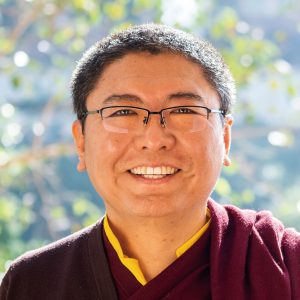
For over three decades, Tsoknyi Rinpoche has been teaching students worldwide about the innermost nature of mind in the Tibetan Buddhist tradition and more recently, how to be a healthy human being with his course, Fully Being. Born into a family respected for its spiritual accomplishments — he is the son of Tulku Urgyen Rinpoche and brother of Mingyur Rinpoche — he was identified while still a small child as the third Tsoknyi Rinpoche and given the special education and upbringing of a tulku, or reincarnate lama. His teachers include some of the most renowned masters of Tibet. Widely recognized as an outstanding meditation teacher, he is the author of many books: Open Heart Open Mind, Carefree Dignity, Fearless Simplicity, Why We Meditate, Ground Path Fruition, How Mindfulness Works and Solid Ground.
Learn meditation under the skillful guidance of world-renowned teacher Yongey Mingyur Rinpoche at your own pace.


From sleepless nights to unexpected ease, this reflection explores how letting go of the need to sleep can transform our relationship with rest.

Discover how one Armenian woman’s journey with meditation is quietly nurturing hope and community in her home country.

“I kept worrying about my “incorrect” meditation practice. I just knew I was not doing it right! This feeling remained an undercurrent — not debilitating but present — until I encountered the Joy of Living with Mingyur Rinpoche.” — Ingrid White-Wilson
If you enjoyed reading our articles, please join our mailing list and we’ll send you our news and latest pieces.




2026© Tergar International. The Tergar logo is a registered service mark of Tergar international.